You are going to quickly find that telling the sharp-shinned hawk from the coopers hawk is very difficult (and is extremely likely to show up on tests and quizzes). This is an excellent website for learning the subtle differences between the two birds: http://www.birds.cornell.edu/pfw/AboutBirdsandFeeding/accipiterIDtable.htm
This website gives you hints for telling adults apart and for also telling juveniles apart. The juveniles have more differences between then, which usually makes them easier to tell apart than the adults, so we will focus primarily on identification of juveniles.
Make sure you take some time to look at this website. It will really help you out.
Monday, February 13, 2012

Sunday, February 12, 2012
Thursday Lab Power point
HAWKS


http://www.utahbirds.org/birdsofutah/BirdsS-Z/SharpShinnedHawk.htm

Physiology:


Physiology:


Physiology:
Physiology:


- Physiology:
- Medium Sized
- Larger than Falcons, but Smaller than Eagles
- Females are larger than Males
- Kill prey with claws
- Broad Wings
- Woodlands
- Nest in Trees
- Nests are constructed from twigs, moss, bark, and sprigs of evergreen
- Mate for Life
- Use the same nest year to year
Osprey


Physiology:
- Crest on back of head
- Speckled Breast
- White Underbelly
- Pale Grey to White Legs
- Black “Mask” on face
- Dark band on the underside of wings
- Barred Wings and tail
- Wings are bowed while soaring and tilt at a slight backward angle
- Nest in Trees, Rock Pinnacles, and Boulders
- Feeds nearly exclusive on fish (dives for them)
Sharp-Shinned Hawk

http://www.utahbirds.org/birdsofutah/BirdsS-Z/SharpShinnedHawk.htm

- Reddish-Brown bars on chest
- Reddish-Yellow Eye with Eyebrow
- White fluffy undertail feathers
- Grayish Blue Crown & Body (Adult)
- Brownish Crown & Body (Juvenile)
- Wide horizontal bars on wings
- Short Round Wings
- Small head and Square Tipped Tail
- Nests are lined with twigs or pieces of bark; sometimes located in old crow/squirrel nests
- Feed on small Birds
Cooper's Hawk


Physiology:
- Yellow Legs and Toes
- Barred Tail with a Round Tip
- Broad Rounded Wings
- Yellow Eyes
- Mottled Dark Brown with a light chest with dark streaks
- Brown Tail
- Reddish-Eyes
- Grayish Blue Upperparts and tail
- White Tip on Tail
- Dark Crown
- Nest in trees, prefer to stay undercover
- Diet: Smaller birds, chipmunks, small squirrels and sometimes bats
Red-Shouldered Hawk


Physiology:
- Grayish-White Head with thin, dark streaks
- Red shoulder patches
- Reddish Brown and White Striped Chest
- White Spots on dark brown plumage
- White undertail feathers
- Reddish leading edge on wings with dark wing tips
- Black and white streaked tail
- Yellow Beak with Black Tip
- Nest near water
- Diet: Mice, chipmunks, snakes, toads, frogs, etc.


- Chocolate-Brown body with darker back and wings
- Pale yellow legs and beak
- White chest and legs
- Reddish-brown tail with lighter edges
- “Open Country Bird”
- Fields, Stand-Alone Trees, etc.


- White throat
- Broad wings with dark edging
- Broad tail with thick white band in middle with a smaller white band edges
- Dark Head and Face
- Reddish Bib
- Yellow Beak with Black-Gray Tip
- Eastern Deciduous Forests
- Hawk Fact~ The Broad-Winged Hawk will congregates into flocks during migration
Physiology:
- Large Sized
- Larger than Hawks and Falcons
- Females are larger than Males
- Very Strong Feet
- Forests
- Savannahs
- Mostly found in eurasia and Africa
- Mate for Life
- Use the same nest year to year
- Young Mature slowly

Physiology:
Immature (1-4th Year)
Physiology:
Immature (1-4th Year)
- Entirely Brown Body
- Begins showing white feathers on head around 3rd year
- Eyes are dark brown
- Underbely Becomes Mottled
- Dark Bill turns yellow after 1st Year
- Pure white head, Yellow Eyes, and Brown body
- Yellow Hooked Bill
- Yellow Legs and Toes
- White tail
- Near lakes, Reservoirs, Marshes, and coasts
- Scavenges on Carron and will steal food from other birds
Physiology:
- Small Sized
- smaller than Hawks and Eagles
- Females are larger than Males
- Kill with a blow to the neck, instead of using their Talons.
- Fast Fliers/Divers
- Long, Narrow Wings
- Forests
- Fields
- Cities
- Sexual Dimorhism in some species resulting in “Morphs”
- Falcon Facts~ Females are called Falcons, Males are called Tiercels


Physiology:
- Brown Back with Black Spots all over Body
- White face with black “tear” drops
- Brown tail with black and white stripes at the tip
- Bluish Gray Wings and Cap (Males)
- Brow Wings and Brownish-Gray Cap (Females)
- White Face
- Deserts, Alpine Meadows, Grasslands, etc
- Falcon Facts~ American Kestrels are the smallest North American Falcons

Physiology:
- Pigeon Sized
- White Eyebrows
- White Throat Patch
- Slate-Blue/Gray Cap and Wings (male)
- Dark brown Cap and wings (Female)
- Prairie
- Forests
Wednesday, February 8, 2012
Tues Lab Powerpoint

Laughing Gull
•Medium
Size
•Black
Hood
•White
Under Parts
•Gray
Wings with Black Outer Feathers
•Reddish
Bill

Bonaparte Gull
•Small
Size
•Black
Bill
•White
Triangle in Outer Part of Wing and Black Wing Tips
•Black
Head only during breeding otherwise Gray
•White
Under Parts
Orange-Red Legs
Great Black Backed Gull
•Very
Large Size
•All
White Under parts
•Black
Wings and Black
•Thick
Yellow Bill with Red Spot on Lower Half
•Pale
Pink Legs

Herring Gull
•Large
Size
•Gray
Back, White Head and Under parts, & Black Wingtips
•Yellow
Bill with Red Spot
•Light
Pink Legs

Ring-billed Gull
•Medium Sized
•Short Yellow Bill with Black Ring
•Yellow Legs
•Gray Back and White Head, Body, and Tail
•Black Wingtips with White Spots

Forster's Tern
•Medium
Sized
•Black
Cap and White/Gray Body
•Long
Forked Tail
•White
Wings
•Long
Orange Legs
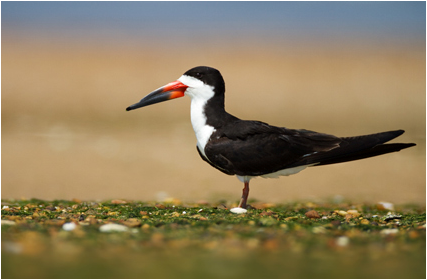
Black Skimmer
•Medium to Large in Size
•Long Red and Black Bill (lower half of bill is longer
than top half)
•Black Cap on Head that Extends on to Back
•White Under Half
•Short Red Legs

American Oystercatcher
•Large
Shorebird
•Large,
Long Red-Orange Bill
•Black
Head and Dark Brown Back
•White
Underside
•White
Wing
•Pale
Pink Stout Legs
Tuesday, February 7, 2012
February 7, 2012 Field Trip (Tuesday Lab)
Deer Park & Sandy Bottom Nature Park
Weather: Sunny, High 50's
Canada Goose

http://www.allaboutbirds.org/guide/Canada_Goose/id/ac
-Large water bird
-Long Neck & White Chin Strap
-Wide, Flat, Black Bill
Carolina Chickadee

http://www.allaboutbirds.org/guide/Carolina_Chickadee/id/ac
-Small Size
-Black Cap on Head
-White Cheeks
-Gray Body
Carolina Wren

http://www.allaboutbirds.org/guide/Carolina_Wren/id/ac
-Small Bird with Round Body
-Upward Pointing Tail
-Reddish Brown in Color
-White Eyebrow Stripe
Chipping Sparrow

http://www.allaboutbirds.org/guide/Chipping_Sparrow/id/ac
-Long Tail
-Medium Sized Bill
-Black Line Through the Eye
-Reddish Brown Cap
Double-Crested Cormorant

http://www.allaboutbirds.org/guide/Double-crested_Cormorant/id/ac
-Large Dark Water Bird
-Green Eye
-Long Neck
Great Blue Heron

http://www.allaboutbirds.org/guide/Great_Blue_Heron/id/ac
-Largest Heron
-Long Legs
-Dagger-Like Bill
-Black Stripe Over Eye
Hooded Merganser

http://www.allaboutbirds.org/guide/Hooded_Merganser/id/ac
-Small/Medium Sized Duck
-White Patch on Side of Head (males only)
-Fan Shaped Crest
Mallard

http://www.allaboutbirds.org/guide/Mallard/id/ac
-Male has a Vibrant Green Head, Rusty Chest, Gray Body, & Yellow Bill
-Female is Brown with Orange bill
Pied-Billed Grebe

http://www.allaboutbirds.org/guide/Pied-billed_Grebe/id/ac
-Small Water Bird
-Chicken-like Head
-Small Bill with Black Ring
-Tufted White Rump
Red-Bellied Woodpecker

http://www.allaboutbirds.org/guide/PHOTO/LARGE/red_bellied_woodpecker_1.jpg
-Black and White Striped Back
-Red Cap and Nape
Ring-Necked Duck

http://www.allaboutbirds.org/guide/Ring-necked_Duck/id/ac
-Medium Sized Duck
-Bluish Bill with White Ring
-Peak on Back of Head
-Gray Sides and White Stripe up Shoulder
Tufted Titmouse

http://www.allaboutbirds.org/guide/Tufted_Titmouse/id/ac
-Pointed Crest
-Stout Bill
-Silver Gray Body with White Underparts
-Black Patch above Bill
Turkey Vulture

http://www.allaboutbirds.org/guide/PHOTO/LARGE/turkey_vulture_2.jpg
-Large Dark Brown Bird
-Long Broad Wings
-Featherless Red Head
Yellow-Rumped Warbler

http://www.allaboutbirds.org/guide/Yellow-rumped_Warbler/id/ac
-Long Narrow Tail
-Gray Birds with Flashes of White in Wings
-Yellow on Face, Sides, & Rump
Sunday, February 5, 2012
Great Horned Owl
So I was doing some laundry during the Super Bowl (I know...lame) and when I was walking back to my apartment I heard an owl call! I checked it out and it's a Great Horned Owl.
Here's some info: http://www.owlpages.com/owls.php?genus=Bubo&species=virginianus
The call I heard was identical to the last recording.
Here's some info: http://www.owlpages.com/owls.php?genus=Bubo&species=virginianus
The call I heard was identical to the last recording.
Subscribe to:
Posts (Atom)